
3-Day Tanzania Safari Itinerary: Best Routes, Costs & Where to Stay
- November 2, 2026
- For Travelers, Travel Guide
3-Day Tanzania Safari Itinerary: Best Routes, Costs & Where to Stay A 3-day Tanzania safari is a great choice if you have... Read More
 by Safari Lala

A group joining safari in Tanzania is one way to experience the country’s famous national parks without paying for a private safari vehicle. Instead of travelling only with your partner, family or friends, you book a seat in a safari vehicle shared with other travellers who have booked separately.
This arrangement can make a Tanzania safari more affordable, especially for solo travellers and couples. It also creates an opportunity to meet people from different countries while exploring destinations such as Serengeti National Park, Ngorongoro Crater and Tarangire National Park.
However, the lower price comes with trade-offs. You normally follow a fixed itinerary, share the vehicle with other guests and have less control over game-drive timing. The experience also depends partly on the group size, the operator’s organisation and the expectations of your fellow travellers.
Understanding these advantages and disadvantages will help you decide whether a group joining safari is the right choice for your trip to Tanzania.
A group joining safari, also called a shared safari or join-in safari, allows individual travellers to join an organised trip with other people who have booked separately.
For example, a safari company may schedule a six-day trip from Arusha to Tarangire, Serengeti and Ngorongoro. Instead of requiring one family or couple to pay for the entire vehicle, the operator sells individual places and brings the guests together for the departure.
The group shares a safari vehicle and guide, while accommodation arrangements depend on the package. Couples usually book their own room or tent, although solo travellers should confirm whether a single room supplement applies.
Group joining safaris are available at different comfort levels. Some use campsites and shared facilities, while others include comfortable lodges or luxury tented camps. The term describes how the safari is organised, not necessarily the standard of accommodation.
The main advantage is affordability. A safari vehicle, driver-guide, fuel and some operating expenses cost money regardless of whether the vehicle carries two or several guests. Sharing these costs can reduce the price paid by each traveller.
This makes group joining particularly attractive to solo travellers who would otherwise need to cover a larger share of the vehicle cost.
Couples can also benefit, especially when their budget is limited and they would rather spend their money on a longer itinerary or better accommodation.
However, a group safari is not automatically the cheapest option for every party. If four to six friends or family members are travelling together, a private safari quotation may be competitive because they can share the vehicle cost among themselves.
Solo travellers often find it difficult to justify the cost of a private safari vehicle for one person. Joining a scheduled departure allows them to explore Tanzania without having to organise an entire trip independently.
The operator generally arranges the route, guide, accommodation and park visits. This reduces the amount of planning required and gives solo travellers a structured way to visit several destinations.
Before booking, check the accommodation policy. You may have a private room or tent at an additional cost, or an operator may offer room-sharing arrangements under specific conditions.
Sharing a safari creates opportunities to meet people from different backgrounds. You might travel with couples, solo visitors, friends or travellers who have come to Tanzania for different reasons.
During long drives and meals, guests can exchange experiences, photography tips and travel recommendations. Some people enjoy the social side of the trip as much as the wildlife.
This advantage depends on your personality. If you enjoy meeting new people, a group safari can make the journey more sociable. If you prefer quiet time, privacy and travelling at your own pace, sharing a vehicle may feel restrictive.
Group joining safaris commonly follow established routes through northern Tanzania. Depending on the itinerary, you may visit Tarangire National Park, Serengeti National Park, Ngorongoro Crater and Lake Manyara National Park.
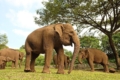
These destinations offer different landscapes and wildlife experiences. Tarangire is known for elephants and baobab trees, the Serengeti for its broad savannahs and large wildlife populations, and Ngorongoro for its crater landscape and resident wildlife.
A group departure can make visiting several parks easier because the operator has already arranged the route, transport and accommodation.
The key is to choose an itinerary that matches your interests. If seeing the Great Migration is your main goal, check the season and the specific area the tour plans to visit. A low-cost safari is poor value if its route does not match your wildlife priorities.
A reputable operator normally coordinates the main parts of the trip, including the itinerary, accommodation, guide and park access.
You do not need to arrange every transfer or negotiate each part of the safari separately. This can be especially helpful for first-time visitors who are unfamiliar with Tanzania’s parks and travel distances.
Nevertheless, you should still read the itinerary and booking conditions. Confirm where the safari starts and ends, which meals are included, how transfers work and whether any activities cost extra.
Sharing a vehicle does not mean you will necessarily see less wildlife. Group and private safaris can visit the same parks, use similar vehicles and employ experienced guides.
The quality of the experience depends on several factors, including the guide, the location, the season, the vehicle and the time available for game drives.
A private safari offers more control over the day, but it cannot guarantee better wildlife sightings. Animals move freely, and even an expensive private trip cannot promise that you will see a particular lion, leopard or migration event.
On a private safari, you can usually discuss the day’s plan directly with your guide and adjust it within park rules and practical limits.
A group joining safari requires the guide to consider everyone’s needs. One guest may want to spend more time watching a leopard, while another may prefer to continue looking for elephants or return to camp.
The guide must balance these preferences, so you may need to leave a sighting before you would choose to do so on a private trip.
This matters particularly for wildlife photographers, birdwatchers and travellers who want to spend extended periods observing specific animals.
Safari vehicles commonly have several passenger seats and a pop-up roof for game viewing. The actual number of guests depends on the operator and vehicle configuration.
When a vehicle is full, there is less personal space for bags, camera equipment and moving between viewing positions. Your preferred seat may not always be available unless the operator specifies a seating policy.
Before booking, ask for the maximum number of guests per vehicle, not simply the number of seats available. A vehicle carrying six guests may feel different from one carrying seven or more, particularly on long drives.
If photography is important to you, ask whether each passenger has access to a window or suitable viewing position and how the operator manages seating.
Scheduled departures usually have fixed dates, accommodation and routes. You cannot assume you will be able to add a night in the Serengeti, change a park or extend a game drive because you prefer to stay longer.
This is useful for travellers who want a straightforward package, but it can be a disadvantage if your priorities change during the trip.
It also means you need to choose carefully before paying. Compare the itinerary with the season, the parks you want to visit and the amount of time allocated to each destination.
Group members may have different interests, energy levels and expectations. Some travellers want early starts and long game drives, while others prefer leisurely breakfasts and shorter outings.
Differences do not necessarily cause problems, but they can affect the atmosphere of the trip.
You cannot know exactly who will book the other seats. A well-organised guide can manage reasonable disagreements, but the group format requires a degree of patience and compromise.
A group joining safari operates on scheduled dates. The operator may have a departure that fits your holiday, or you may need to adjust your plans.
Some companies advertise frequent departures, while others operate only when enough bookings are received. Ask whether your departure is confirmed, what happens if there are not enough guests and whether your payment is refundable if the operator cancels.
Do not assume that an advertised itinerary will operate on every date.
Group joining safaris range from budget camping to comfortable lodge packages. The price alone does not tell you what the accommodation will be like.
A lower-cost trip may use public campsites, shared bathrooms or properties farther from the park. A more expensive package may include en-suite rooms, permanent tented camps or accommodation in more convenient locations.
Neither arrangement is automatically right or wrong. The important point is to understand what you are paying for.
Check the names of the accommodation properties, room or tent type, meal plan, bathroom facilities and location before booking.
Some safari prices exclude items that can materially affect the final cost. These may include airport transfers, accommodation before or after the safari, drinks, tips, optional activities or certain fees.
Park and conservation charges are particularly important when comparing multi-day itineraries.
Ask for a written list of inclusions and exclusions. Confirm the total amount payable, the payment schedule, cancellation conditions and any extra charges you may face during the trip.
A slightly more expensive package can offer better value if it includes services that another operator charges separately.
Neither format is best for everyone. The difference is mainly how the trip is organised and how much control you have over the experience.
| Factor | Group joining safari | Private safari |
|---|---|---|
| Cost per person | Usually lower for solo travellers and couples | Often higher for small parties |
| Vehicle | Shared with other guests | Reserved for your booking party |
| Itinerary | Usually fixed | More adaptable |
| Game-drive pace | Balanced around the group | Discussed with your guide |
| Social experience | Meet other travellers | More privacy |
| Accommodation | Budget to luxury, depending on package | Budget to luxury, depending on package |
| Best fit | Budget-conscious and sociable travellers | Travellers who value privacy and flexibility |
A private safari is not necessarily luxurious, and a group joining safari is not necessarily basic. You can book private camping safaris or join shared trips with comfortable lodge accommodation.
Compare the actual packages, not just the labels.
A group joining safari can be a practical way to explore Tanzania when booked with a reputable operator. However, joining a group does not remove every travel risk.
Before paying, verify the operator’s identity, ask about the guide’s experience and confirm the type and condition of the safari vehicle. Read recent independent reviews and make sure the company provides a written itinerary and clear booking terms.
During the trip, follow the guide’s instructions around wildlife, campsites and park rules. Keep valuables secure and confirm how the operator handles emergencies, vehicle problems and changes to the itinerary.
For solo travellers, ask how accommodation and transfers are organised, especially when arriving late or departing before the rest of the group.
A group safari provides shared transport and company, but it should not be treated as a substitute for checking the operator’s safety arrangements.
It can be a suitable option for solo female travellers who want a structured trip and the opportunity to travel with others. Having a planned itinerary, a professional guide and organised accommodation can simplify the logistics.
However, safety depends on the operator, the group arrangements and the accommodation. Before booking, check whether you will have a private room or tent, how airport transfers are handled and whether the departure is confirmed.
Read recent reviews from other solo travellers and ask the operator how it handles concerns or disputes during a trip. Trust your judgement if the booking details are unclear or the company is reluctant to answer reasonable questions.
For couples on a budget, a group joining safari can provide access to Tanzania’s major parks at a lower cost than hiring a private vehicle.
It can work well if both travellers are comfortable sharing the experience with strangers and following a set schedule.
However, couples celebrating a honeymoon or anniversary may prefer a private safari because it offers more privacy and flexibility. If a private trip is beyond your budget, consider a shared safari with comfortable accommodation and spend extra on a special lodge stay before or after the group departure.
The decision should reflect what matters most to you: lower cost and a social experience, or privacy and control over the itinerary.
Start by checking the details that directly affect your experience.
Confirm the group size. Ask how many passengers will share the vehicle and whether the number is a maximum or an estimate.
Check the itinerary. Make sure you understand the parks, number of nights, travel times and game-drive schedule.
Verify the accommodation. Ask for the property names, room types and meal arrangements rather than accepting descriptions such as “standard lodge.”
Understand the total cost. Confirm park and conservation fees, transfers, meals, drinks, tips and optional activities.
Ask whether the departure is confirmed. Find out what happens if the operator cannot fill the available seats or cancels the trip.
Read recent reviews. Look for comments about guiding, vehicle condition, communication, accommodation and how the operator handled problems.
Check the migration season if relevant. The Great Migration moves throughout the Serengeti ecosystem. Ask which area the safari plans to visit during your dates and why.
These checks help you compare the real experience rather than choosing only by advertised price.
A group joining safari is particularly suitable for solo travellers who want to share costs, couples who want an affordable route through Tanzania’s parks, and visitors who enjoy meeting other travellers.
It can also work for first-time safari visitors who prefer an organised package rather than coordinating every part of the journey themselves.
A private safari may be a better fit for photographers, families with specific needs, couples seeking privacy or travellers who want to spend longer at particular wildlife sightings.
If you are travelling with a larger party, request both group and private quotations. Sharing a private vehicle among several friends or family members may narrow the price difference.
The main advantage of a group joining Tanzania safari is the opportunity to experience the country’s wildlife at a lower cost per person. It can also make solo travel easier and provide a social experience with other visitors.
The main disadvantages are reduced flexibility, shared vehicle space, fixed departure dates and the need to compromise with other travellers.
Before booking, check the group size, itinerary, accommodation, full price and operator’s terms. If you are comfortable sharing the journey, a group joining safari can be a practical way to explore Tanzania. If privacy and control matter more than cost, compare it with a private safari before making your decision.
The best choice is the one that fits your budget, travel style and wildlife priorities.

3-Day Tanzania Safari Itinerary: Best Routes, Costs & Where to Stay A 3-day Tanzania safari is a great choice if you have... Read More
Moshi is one of the best places to stay before climbing Mount Kilimanjaro. Located in northern Tanzania, near the mountain’s southern slopes,... Read More
Planning a safari in Tanzania involves more than choosing national parks and wildlife experiences. You also need to decide where to spend... Read More
Join The Discussion