

3-Day Tanzania Safari Itinerary: Best Routes, Costs & Where to Stay
- November 2, 2026
- For Travelers, Travel Guide
3-Day Tanzania Safari Itinerary: Best Routes, Costs & Where to Stay A 3-day Tanzania safari is a great choice if you have... Read More
 by Safari Lala
A 7-day luxury Tanzania safari in February is an excellent way to experience the Great Wildebeest Migration during its calving season. The main destination to focus on is Ndutu, across the southern Serengeti ecosystem and the adjoining Ngorongoro Conservation Area. During this period, large herds of wildebeest gather on the short-grass plains, where many calves are born and predators follow the herds.
For couples planning an anniversary trip, the experience can combine private game drives, intimate tented camps, dramatic wildlife photography and dinners under the African night sky. The key is to spend enough time in the calving area rather than rushing between too many parks.
This guide explains where to go, when to travel, which luxury camps to consider and how to plan a seven-day itinerary around the wildebeest calving season.
February falls within the main wildebeest calving period in the southern Serengeti and Ndutu area. The herds gather where seasonal rainfall produces nutritious short grass, giving pregnant wildebeest suitable conditions for giving birth and raising their young.
The result is a different kind of Great Migration experience from the famous Mara River crossings later in the year. Instead of concentrating on river crossings, February visitors look for newborn calves, large herds moving across the plains and predators such as lions, cheetahs, hyenas and jackals.
Calving does not happen on a fixed schedule, and the number of animals in a particular area changes with rainfall and grazing conditions. February is generally a strong month, but no safari operator can guarantee a specific birth, hunt or predator sighting.
For a luxury safari, February also offers an opportunity to stay in seasonal camps positioned near the herds. These camps can reduce the amount of time spent travelling to wildlife-viewing areas and make it easier to return to camp for lunch, relaxation or a special evening.
Ndutu should be the main focus of a February calving safari. The area lies across the southern part of the Serengeti ecosystem, near the boundary between the Ngorongoro Conservation Area and Serengeti National Park.
The open plains provide opportunities to observe large wildebeest herds, while the surrounding woodlands, marshes and lakes attract other wildlife. Zebra and gazelle may also be present, and the concentration of young wildebeest can draw predators into the area.
Ndutu is not a single enclosed viewing point. Herds spread across a broad landscape, and sightings depend on their location on the day. A knowledgeable guide who can adjust the route according to recent wildlife movements is especially valuable during calving season.
For a seven-day luxury itinerary, spending four nights around Ndutu gives you time to explore different parts of the area. It also reduces the need to pack, check out and move between camps every day.
Ngorongoro Crater offers a different wildlife experience from Ndutu. Its enclosed landscape supports resident wildlife, including buffalo, elephants, lions and other animals. A game drive across the crater floor can add variety to an itinerary focused on wildebeest calving.
The crater is not the main destination for following the migrating wildebeest herds in February. Treat it as a complementary safari experience rather than a substitute for time in Ndutu.
Central Serengeti is known for its year-round wildlife and can be useful if your trip includes extra days or you want to explore a different part of the ecosystem. However, for a February itinerary whose main goal is to see calving, the southern plains should take priority.
The best route depends on your arrival airport, departure flight, budget and the latest location of the herds. A safari planner should check seasonal camp positions and flight schedules before confirming the final itinerary.
This itinerary balances travel time, wildlife viewing and comfortable accommodation. It assumes arrival through Kilimanjaro International Airport and departure from the same airport or a nearby airport connection. Your exact schedule may change depending on flight times and camp availability.
Arrive at Kilimanjaro International Airport and transfer to a luxury lodge in Arusha. After a long international flight, a relaxed first night is usually more comfortable than attempting a lengthy road journey to the safari areas.
Use the afternoon to rest, enjoy the lodge facilities and meet your safari representative if arrangements allow. Confirm your luggage limits for any scheduled light aircraft flights, as small safari aircraft often have strict baggage restrictions.
For an anniversary, request a private dinner, a room with a peaceful setting or another simple welcome arrangement. Tell the lodge in advance that you are celebrating so it can confirm what is available.
After breakfast, travel to Ndutu by scheduled or chartered light aircraft where practical, or by road as part of a planned itinerary. The best option depends on flight availability, the location of your camp and your overall budget.
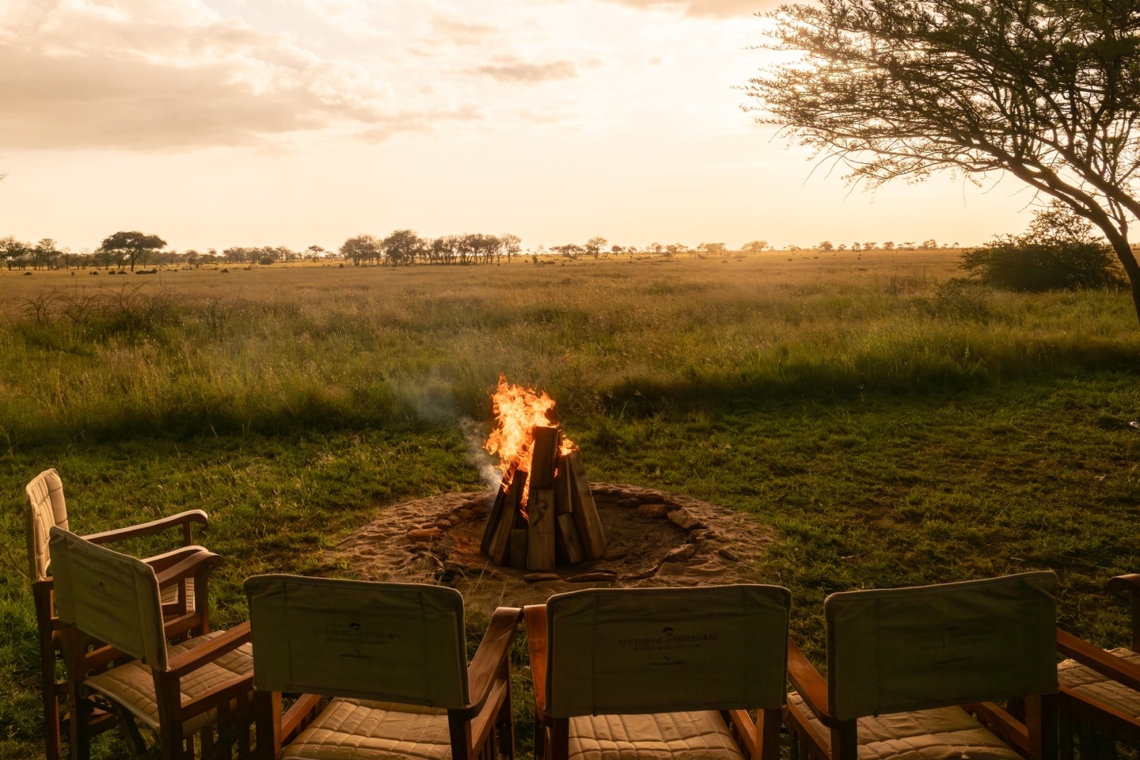
Spend the next four nights in a seasonal luxury tented camp near the calving plains. Each day, your guide can search for wildebeest herds, young calves and predators, choosing routes based on current sightings and conditions.
Early morning drives can be productive for wildlife viewing and photography. Depending on sightings and camp arrangements, you may also enjoy afternoon drives, sundowners or a private bush meal.
Four nights in the area provide flexibility. One day may focus on a large herd, while another may involve exploring different plains, woodlands or seasonal water sources. The experience is about following wildlife in its natural environment, not visiting a fixed attraction with guaranteed events.
For an anniversary, ask whether the camp can arrange a private vehicle, a secluded dinner or a special sundowner. Confirm the price and availability before booking because these services may cost extra.
Leave Ndutu and travel towards the Ngorongoro area. Depending on your arrangements, this may involve a road transfer or a combination of safari flights and ground transport.
If your schedule and permits allow, descend into Ngorongoro Crater for a game drive. The crater’s varied habitats offer a chance to see wildlife in a different setting from the open southern plains.
Spend the night at a luxury lodge in the Ngorongoro highlands or another suitable location along your departure route. The highland environment can be cooler than the plains, so pack a warm layer for the evening.
If your international flight leaves early the following morning, consider staying closer to Arusha or the airport instead of adding a long transfer at the end of the safari.
After breakfast, transfer towards Arusha or Kilimanjaro International Airport, depending on your flight arrangements.
Leave enough time for road transfers, check-in and any domestic flight connections. If your international departure is early, a final night in Arusha may be more practical, which means adjusting the itinerary to include six nights or changing the timing of the safari.
A well-planned final day is better than squeezing in one more activity and risking a missed flight.
Choosing the right camp is as important as choosing the destination. For February, look for a property that operates in Ndutu during the calving season, offers reliable guiding and can confirm the practical details of its game-drive arrangements.
Lemala Ndutu Tented Camp is a seasonal mobile camp in the Ndutu region of the Ngorongoro Conservation Area, near the southern Serengeti. Its official information identifies December through March as the period when the camp is positioned in Ndutu for the migration and calving season.
The camp offers a classic tented safari experience. Its seasonal location makes it a relevant option for travellers who want to spend several days close to the calving grounds rather than commuting from a distant lodge.
Official website: https://www.lemalacamps.com/stay/mara-ndutu-tented-camp/
Before booking, confirm the camp’s exact operating dates, current room configuration, inclusions and whether a private vehicle can be arranged.
Several other seasonal camps operate in or around Ndutu during the calving period. Availability and exact locations can vary by season, so request current details rather than assuming that every camp operates in the same place throughout the year.
When comparing properties, consider the following:
Location: Ask how the camp’s current position relates to the calving plains and the areas your guide expects to explore.
Guiding: Confirm whether game drives are shared or private. A private vehicle gives couples more flexibility with departure times, photography stops and how long they spend at sightings.
Comfort: Check whether the tent has an en-suite bathroom, hot-water shower, charging facilities and the level of privacy you expect from a luxury stay.
Dining: Ask whether meals are included, whether dietary requirements can be accommodated and whether private bush dining is available at an additional cost.
Transfers: Confirm whether airstrip transfers are included and which airstrip serves the camp. The most convenient flight can depend on the property’s seasonal location.
Price: Compare complete safari quotes, not just the advertised nightly rate. A lower accommodation price may exclude guiding, park or conservation fees, flights and transfers.
For an anniversary, the best camp is not necessarily the most expensive. It is the one that combines a suitable seasonal location with the level of comfort, privacy and guiding you want.
The cost depends on the exact February dates, camp category, number of travellers, private guiding, domestic flights and included park or conservation fees. February falls within the high-season rate period for some seasonal camps, so it is important to check prices for the actual travel year.
For example, Lemala’s published rates list Ndutu Tented Camp at US$825 per person sharing per night from 20 December 2026 through 31 March 2027. This is a published accommodation rate and should not be treated as the total cost of a complete seven-day safari. Rates and inclusions must be reconfirmed when booking.
A full quote may include:
For a couple, request a single itemised quote covering the entire trip. Ask the operator to separate included services from optional extras and to explain cancellation terms, payment deadlines and what happens if weather or flight schedules change.
Do not compare two quotes until you know whether both include the same number of nights, game drives, flights, fees and private guiding.
February is a strong choice for travellers whose priority is the wildebeest calving season. The southern Serengeti and Ndutu area often holds large herds during this period, and newborn calves can attract predators.
The landscape can be green after seasonal rains, creating attractive conditions for photography. However, rain can affect road conditions and flight operations, and wildlife locations change with the weather.
February is not the best month for every Great Migration experience. Travellers whose main goal is to see the dramatic Mara River crossings usually plan for a different part of the year, often around the northern Serengeti migration period. Even then, river crossings are unpredictable and cannot be guaranteed.
If your priority is newborn wildebeest and predator activity, focus on Ndutu. If you prefer a broader itinerary, you can add Ngorongoro or another park, provided the extra travel does not reduce your time in the calving area too much.
February conditions can vary between warm days, cool early mornings and occasional rain. Pack clothing that works in layers rather than relying only on lightweight summer clothes.
Bring neutral-coloured shirts and trousers, a light waterproof jacket, a warm layer for early game drives, comfortable walking shoes, a sun hat, sunglasses and sunscreen. Binoculars can improve wildlife viewing, while a camera with a suitable zoom lens is useful for observing animals from a safe distance.
A small day bag is helpful for carrying water, personal medication and camera equipment. Keep luggage within the weight and bag-type limits supplied by your safari operator, especially if your itinerary includes light aircraft.
Speak to a travel-health professional before departure about malaria prevention and other health precautions relevant to your itinerary. Make sure your travel insurance covers safari activities and emergency medical evacuation where needed.
The wildlife should remain the centre of the trip, but a few carefully chosen extras can make the safari feel personal.
Arrange a private vehicle if it fits your budget. This allows you to move at your own pace, spend longer photographing a sighting and return to camp when you prefer.
Tell the camp about your anniversary before arrival. Ask about private dining, sundowners or a room arrangement with additional privacy. Confirm what is included and what costs extra rather than assuming such services are complimentary.
Avoid changing camps every night. Several nights in one seasonal location make the trip more relaxing and give your guide time to explore different parts of the area.
Most importantly, keep your schedule flexible. The best wildlife moments cannot be timed to a reservation, and an unhurried day in the field can be more memorable than a packed itinerary.
Book seasonal accommodation early, particularly if your dates fall in the middle of February. Confirm the camp’s exact location for your travel year and ask how it plans game drives around current herd movements.
Choose a reputable safari operator that provides a written itinerary, transparent pricing and clear emergency arrangements. Check the baggage limits for internal flights, the cancellation policy and the arrangements for delayed flights.
If you are travelling from overseas, allow enough time between your international arrival and any onward safari flight. For the return journey, avoid booking a tight connection between a remote airstrip and an international departure.
Before paying, verify the accommodation directly or through an established booking provider. Make sure the quote specifies the number of nights, room type, meal plan, game drives, fees and transfers.
Ndutu and the southern Serengeti ecosystem are the main areas to consider. Wildebeest gather on the short-grass plains during the calving period, although exact herd locations change with rainfall and grazing conditions.
For a seven-day safari, four nights in Ndutu is a practical starting point. It gives you several opportunities to explore the area without spending too much of the trip transferring between camps.
February is generally a strong month for calving, and visitors may see newborn calves alongside large herds. Wildlife sightings are never guaranteed, so choose a camp and guide who can respond to current conditions.
Many seasonal luxury camps offer en-suite tents, comfortable beds, meals and shared lounge or dining areas. Facilities differ by camp, so check the current room details and services before booking.
Yes, if your schedule allows. Ngorongoro provides a different wildlife experience and can add variety to a calving-focused safari. However, avoid reducing your Ndutu stay too much if wildebeest calving is your main priority.
A private vehicle can offer more flexibility with game-drive timing, photography and the length of each wildlife stop. It costs more than joining shared drives, so ask the operator to price both options.
No. The migration is a natural movement influenced by rainfall, grass growth and other environmental conditions. February is a typical calving-season month in Ndutu, but the location and intensity of sightings vary from year to year.
For a seven-day luxury Tanzania safari in February, build the itinerary around four nights in Ndutu, where the southern Serengeti ecosystem’s wildebeest calving season is usually at its height. Add a comfortable arrival night in Arusha and, if your flight schedule allows, a final safari experience in Ngorongoro before departure.
Choose a seasonal camp with a suitable location, experienced guides and the comfort you want for your anniversary. Confirm the current camp position, full package cost and flight arrangements before booking.
The goal is to spend enough time where the herds are gathering, while leaving room for the unexpected wildlife encounters that make a safari special.

3-Day Tanzania Safari Itinerary: Best Routes, Costs & Where to Stay A 3-day Tanzania safari is a great choice if you have... Read More
Moshi is one of the best places to stay before climbing Mount Kilimanjaro. Located in northern Tanzania, near the mountain’s southern slopes,... Read More
Planning a safari in Tanzania involves more than choosing national parks and wildlife experiences. You also need to decide where to spend... Read More
Join The Discussion