

Tanzania Group Joining Safari: Where to Stay Before Your Safari
- September 29, 2026
- For Travelers
A Tanzania group joining safari is a shared safari where you travel with other people in the same safari vehicle instead of... Read More
 by Safari Lala
Tanzania is one of Africa’s most famous safari destinations, but experiencing its wildlife does not necessarily mean staying in an expensive luxury camp.
Across the country, travelers can find comfortable lodges, tented camps, guesthouses and safari properties that make a Tanzania safari possible on a more controlled budget. The key is knowing where to stay, what type of accommodation to choose, and how location affects the overall cost of a safari.
For many travelers, the biggest accommodation decision is not simply finding the cheapest room. It is finding a place that offers a good balance between price, comfort, location and access to the parks they want to visit.
A lodge that costs less but is several hours away from the safari area may not actually save much money once transportation and additional driving are considered. On the other hand, staying in a town such as Karatu can provide access to Ngorongoro Crater and Lake Manyara while giving travelers considerably more accommodation choice than staying inside a premium safari area.
This guide explores affordable safari lodges and accommodation options across Tanzania, including the Northern Safari Circuit destinations of Serengeti, Ngorongoro, Tarangire and Lake Manyara, as well as southern destinations such as Nyerere National Park and Ruaha National Park.
It also explains how safari accommodation prices work, where budget travelers can save money, which areas are particularly useful for affordable accommodation, what to look for when comparing lodges, and how to choose a property based on your itinerary.
The goal is not simply to give you a list of lodges.
It is to help you understand where to stay, why to stay there and how to find accommodation that fits your safari budget.
If you are looking for affordable safari accommodation, several areas are particularly useful.
Karatu is one of the most important places to consider for travelers visiting Ngorongoro Crater and Lake Manyara. The town has a large selection of lodges and smaller accommodation properties, making it possible to find options across different budgets.
Mto wa Mbu is another useful base, especially for travelers combining Lake Manyara and Tarangire with a broader Northern Circuit itinerary.
Tarangire has accommodation both inside and around the national park, while Serengeti offers everything from basic camps and mobile tented camps to expensive permanent luxury camps.
In southern Tanzania, Nyerere National Park and Ruaha provide different accommodation choices, although travelers should consider distances and safari logistics carefully when comparing prices.
The most suitable affordable lodge depends on your itinerary.
A traveler visiting Ngorongoro may have very different accommodation needs from someone spending four nights in Serengeti.

There is no single price that defines an affordable safari lodge in Tanzania.
Accommodation prices can change according to location, season, room category, meal plan, demand, length of stay and whether the property is inside or outside a national park.
The word “affordable” is therefore relative.
For one traveler, an affordable lodge may mean a simple room outside the national park. For another, it may mean a comfortable mid-range lodge with a swimming pool, private bathroom and full-board meals.
This is why comparing accommodation purely by the nightly room rate can sometimes be misleading.
A property with a lower room price may require a longer drive to reach the park. Another property may cost more per night but reduce driving time and make the overall safari more convenient.
For a useful comparison, consider the complete travel cost rather than accommodation alone.
This includes accommodation, transportation, safari vehicle costs, park fees, meals when they are not included, transfers and other itinerary expenses.
Tanzania has accommodation at many levels.
At the lower end, travelers can find campsites, basic guesthouses, simple lodges and other accommodation designed for visitors who prioritize price.
The next level includes comfortable budget and mid-range lodges. These properties commonly provide private rooms, bathrooms, meals and other facilities while remaining less expensive than high-end safari camps.
At the higher end are premium lodges and luxury tented camps, often offering larger rooms, extensive services, private experiences and prime locations.
For many travelers, the middle category offers the most useful balance.
You can still enjoy a comfortable bed, private bathroom, meals, a pleasant setting and safari-oriented services without paying the prices associated with luxury properties.
One of the most important things to understand before booking accommodation in Tanzania is that location can affect the entire safari experience.
Tanzania’s major national parks are large.
Serengeti alone covers an enormous area, while Ngorongoro, Tarangire and other safari destinations can involve significant driving between accommodation and wildlife areas.
A lodge outside a park can be cheaper than accommodation inside the park.
That does not automatically make it the better option.
If your itinerary involves early morning game drives, a property farther away may require an earlier departure and more driving.
For travelers with limited time, paying slightly more for a conveniently located property can sometimes make the itinerary easier.
For travelers with more time, staying outside a premium safari area can be an excellent way to control accommodation costs.
This is why there is no universal answer to the question of which affordable safari lodge is best.
The right choice depends on the route.
Tanzania is not one single safari destination.
Different parks require different accommodation strategies.
A lodge that works extremely well for a Ngorongoro itinerary may not make sense for a Serengeti itinerary.
The following sections break down the main safari areas so you can understand where affordable accommodation is available and what type of traveler each destination may suit.
Karatu is one of the most useful accommodation bases for travelers exploring northern Tanzania.
Located between the Lake Manyara and Ngorongoro areas, Karatu has developed a strong accommodation sector serving safari travelers.
For budget-conscious visitors, this is particularly important.
Instead of staying at a high-priced property near the crater rim, travelers can stay in or around Karatu and use the town as a base for their Northern Circuit itinerary.
Karatu offers a mixture of lodges, guesthouses, farm-style properties and other accommodation.
The atmosphere is also different from staying inside a national park.
You are staying in a populated area with access to local services rather than an isolated safari camp.
For many itineraries, that can make Karatu one of the most practical places to look for affordable accommodation.
The main advantage is choice.
Travelers can compare different accommodation levels instead of being restricted to a small number of properties.
Karatu also works particularly well for itineraries that combine Ngorongoro Crater and Lake Manyara.
A traveler could spend a night in Karatu before visiting Ngorongoro, then continue toward the Serengeti.
This can be more economical than booking premium accommodation at every stage of the journey.
Another advantage is that Karatu is a useful stopover for travelers arriving from Arusha.
Rather than rushing directly through the area, travelers can spend a night and continue their safari the following morning.
Marera Valley Lodge is one of the properties travelers can consider when looking for accommodation around Karatu.
Its location makes it relevant to itineraries involving the Ngorongoro and Lake Manyara areas.
The property is suited to travelers who want lodge accommodation rather than a basic campsite.
When comparing a property such as Marera Valley Lodge, travelers should consider more than the room rate.
Look at the distance to the next safari destination, the meal arrangement, room type and whether the property fits naturally into the planned route.
Country Lodge Karatu is another accommodation option in the Karatu area.
Its location makes it relevant to travelers using Karatu as a base for northern Tanzania.
Karatu properties can be particularly useful for travelers who want a comfortable place to sleep without paying premium prices associated with some properties located closer to major attractions.
The practical advantage is the combination of accommodation choice and accessibility.

Bougainvillea Safari Lodge is another option around Karatu for travelers looking for lodge accommodation near the Ngorongoro and Lake Manyara region.
Properties in this part of Tanzania are often used by travelers following classic Northern Circuit itineraries.
A common route may include Tarangire, Lake Manyara, Ngorongoro and Serengeti.
Using Karatu as an overnight base can make the middle section of such an itinerary relatively straightforward.
Farm of Dreams Lodge is another property associated with the Karatu accommodation market.
For travelers comparing affordable and mid-range accommodation, properties in Karatu are worth investigating because the town provides multiple alternatives within a relatively concentrated area.
This makes comparison easier than in remote safari locations where there may be fewer properties.
Eileen’s Trees Inn is another accommodation option associated with Karatu.
The broader Karatu area is especially useful when accommodation is being selected according to itinerary rather than simply destination name.
For example, someone searching for “Ngorongoro accommodation” does not necessarily need to stay directly on the crater rim.
Karatu can be a practical alternative.
Ngorongoro Crater is one of Tanzania’s most famous wildlife destinations.
Accommodation around the crater ranges from high-end lodges with spectacular views to more affordable properties in surrounding areas.
For budget-conscious travelers, one of the most important decisions is whether to stay near the crater itself or farther away in Karatu.
Accommodation on or very close to the crater rim can provide an exceptional location.
The trade-off is that prime locations can come with higher accommodation prices.
For travelers with a larger budget, this may be worthwhile.
For travelers trying to reduce accommodation costs, it may make more sense to stay farther away and allocate more of the budget toward the safari experience itself.
Karatu is often the alternative considered by budget and mid-range travelers.
You can stay in a comfortable lodge, enjoy meals and facilities, then travel toward Ngorongoro for the day’s activities.
This approach can be particularly useful for travelers who are more interested in wildlife than in paying for a premium crater-view room.
When choosing accommodation near Ngorongoro, consider:
The distance to the crater entrance.
The time your safari vehicle needs to reach the park.
Whether breakfast or other meals are included.
Whether the property provides packed lunches.
Whether the room has a private bathroom.
Whether there are family or triple rooms if you are traveling as a group.
Whether the property fits naturally between your previous and next safari destinations.
These details can be more important than the accommodation name itself.
Lake Manyara National Park is often included in Northern Circuit itineraries.
The park is relatively easy to combine with Tarangire and Ngorongoro, making the surrounding accommodation market useful for travelers who want to control costs.
Mto wa Mbu and Karatu are two areas that travelers may consider depending on their itinerary.
Mto wa Mbu is particularly interesting because of its position close to Lake Manyara and its connection with the broader Northern Circuit.
The town has a range of accommodation options.
For travelers who want to experience more than wildlife, the area also provides access to cultural experiences and local activities.
This can make an overnight stay more than simply a place to sleep between game drives.
Migombani Camp is one accommodation option travelers can consider around the Lake Manyara area.
Camp-style accommodation can provide a different experience from traditional lodges.
For travelers choosing between a lodge and a tented property, it is useful to consider the atmosphere they want as well as the price.
A safari is not only about having a room.
The accommodation itself becomes part of the travel experience.
Tarangire National Park is one of Tanzania’s most important safari destinations and is well known for its elephants, large baobab trees and seasonal wildlife concentrations.
The park is often included in Northern Circuit itineraries.
For travelers trying to control costs, accommodation around Tarangire can be an important part of the planning process.
Staying inside or very close to a national park can provide an advantage because you are already near the wildlife areas.
The downside is that accommodation in prime safari locations can be more expensive.
Travelers should compare the value of reduced driving time against the additional accommodation cost.
Accommodation outside the park can sometimes offer lower prices.
This can be suitable for travelers who are comfortable with driving into the park in the morning.
The best choice depends on how much time you have.
If your itinerary is only one night and one game drive, location becomes particularly important.
If you have several days, a cheaper property farther away may be more acceptable.
Sangaiwe Tented Lodge is one property that can be considered by travelers planning a Tarangire-focused itinerary.
Tented lodges can offer a useful middle ground between conventional lodge accommodation and camping.
They can provide the feeling of being close to nature while still offering a proper room, bed and private facilities.
Serengeti is perhaps the most famous safari destination in Tanzania.
It is also one of the places where accommodation decisions can have a major effect on the total cost of a safari.
The Serengeti is enormous.
Where you stay matters.
The remote nature of Serengeti creates additional operational costs.
Properties must provide accommodation, food, water, staff, energy and logistics in areas far from major towns.
Some properties also occupy particularly valuable locations for wildlife viewing.
This is one reason why Serengeti accommodation can cost considerably more than accommodation in towns outside the parks.
However, there are still ways to approach the Serengeti on a more controlled budget.
Tented camps can be one of the options to investigate.
They vary considerably.
Some are highly luxurious permanent camps, while others are simpler mobile or semi-permanent properties.
Do not assume that the word “tent” means cheap.
Some tented camps are among the most expensive accommodation options in Tanzania.
Always compare the actual property, facilities, location and included services.
Kati Kati Tented Camp is one of the properties travelers may encounter when researching Serengeti accommodation.
For a traveler planning Serengeti, the most important question is not simply whether a camp is affordable.
It is whether its location works for the particular safari itinerary.
Serengeti is large enough that a property can be very convenient for one itinerary and less convenient for another.
The Great Migration is one of the most popular reasons people visit Serengeti.
Accommodation prices can change considerably depending on demand and season.
Travelers interested in the migration should therefore avoid choosing accommodation based solely on a generic “cheap Serengeti lodge” search.
Location matters.
The best area for following wildlife depends on the time of year, and the migration itself is a natural event rather than a fixed attraction that stays in one place.
This makes flexibility valuable.
One approach is to compare different areas of Serengeti rather than assuming the most famous location is automatically necessary.
Another is to combine a night or two inside Serengeti with less expensive accommodation before or after the park.
For example, a longer itinerary might include affordable accommodation around Karatu before entering Serengeti.
This reduces the number of nights spent in remote safari accommodation.
Nyerere National Park offers a different safari experience from northern Tanzania.
The park is particularly known for its large wilderness areas, river environment and opportunities for boat safaris alongside traditional game drives.
Travelers visiting southern Tanzania should consider accommodation as part of the overall logistics.
Nyerere is large, and distances matter.
A lower room rate does not necessarily mean lower total travel costs if the property is inconveniently located.
Southern Tanzania can be a good option for travelers who want a safari experience away from some of the busiest Northern Circuit routes.
Accommodation varies from simple camps to high-end lodges.
Travelers should compare the complete package.
If boat safaris are part of your plan, consider whether the accommodation can arrange or conveniently connect you with those experiences.
Ruaha National Park is another major southern Tanzania safari destination.
It is known for its wilderness, landscapes and wildlife.
Like Nyerere, Ruaha requires travelers to think carefully about logistics.
Accommodation can be an important part of the safari experience because the destination is remote.
Travelers looking for affordable accommodation should compare properties based on location, facilities, included meals and accessibility.
A cheaper property that creates complicated transfers may not necessarily be the most economical option for the complete trip.
Couples often want something more comfortable than the most basic accommodation but may not want to pay luxury-camp prices.
A good affordable lodge for couples can provide privacy, comfortable rooms, a pleasant setting and easy access to safari activities.
Karatu is particularly interesting for couples combining Ngorongoro and Lake Manyara.
Tented camps can also be attractive for couples who want a more traditional safari atmosphere.
When comparing properties, look at room configuration, private bathrooms, dining arrangements, swimming pools and the overall setting.
A couple may value atmosphere and privacy differently from a family traveling with children.
Families need to look beyond the advertised room price.
The most important questions may include whether children are accepted, whether family rooms are available, whether extra beds can be provided, and whether meals can accommodate children.
Some safari lodges are designed primarily for adults, while others are more suitable for families.
Family travelers should also consider driving time.
Long transfers can be tiring for younger children.
A slightly more expensive property in a convenient location may sometimes make an itinerary easier.
Check the room occupancy.
Check whether children can share existing beds.
Check whether family rooms are available.
Check whether meals are included.
Check whether the property has a swimming pool or other child-friendly facilities.
Check the distance to the safari park.
Check whether the lodge can arrange family-friendly safari activities.
Solo travelers often face a different cost structure.
Many safari expenses are shared across the group, particularly vehicle and guide costs.
This means accommodation is only one part of the budget.
A solo traveler may therefore benefit from joining a group safari or choosing accommodation that works with shared safari arrangements.
Guesthouses, smaller lodges and budget properties can be particularly useful.
However, solo travelers should not choose accommodation solely because it is cheap.
Security, location, transport arrangements and reliable communication are important considerations.
First-time visitors often benefit from choosing accommodation that fits a straightforward itinerary.
The Northern Circuit is popular because several major destinations can be combined into one trip.
A typical route may involve Arusha, Tarangire, Lake Manyara, Ngorongoro and Serengeti.
Accommodation can be selected around the route rather than choosing properties independently.
This is important.
If you book accommodation without considering the route, you may create unnecessary driving.
Instead, map the safari first.
Then choose accommodation.

Accommodation prices vary significantly.
There is no reliable single price that applies to every season and every lodge.
The same property may have different rates for different dates, room categories and occupancy levels.
Instead of treating a single price as permanent, travelers should think in terms of accommodation tiers.
Budget properties generally focus on providing the essentials.
Mid-range properties offer additional comfort and facilities.
Upper mid-range properties may provide larger rooms, stronger services and more desirable locations.
Luxury properties often add premium settings, extensive facilities and highly personalized service.
The important point is that room price is not the same thing as safari cost.
A safari can remain expensive even when accommodation is inexpensive because national park fees, transportation and guide services form a large part of the total.
The cheapest strategy depends on the itinerary.
For some travelers, camping can reduce accommodation costs.
For others, staying outside the national park in places such as Karatu or Mto wa Mbu may provide better value.
Group safaris can also reduce the per-person cost of transportation.
Traveling outside the busiest periods may provide additional accommodation choices and potentially better rates.
However, the cheapest possible option is not always the best value.
The objective should be to reduce unnecessary costs without damaging the safari experience.
There is an important difference between “cheap” and “affordable.”
Cheap usually emphasizes the lowest price.
Affordable considers price relative to comfort, location and services.
A simple property outside a park may be cheap.
A comfortable lodge with good park access may be more expensive but still affordable.
For most travelers, the second approach is more useful.
You are not simply buying a bed.
You are buying a place within a larger journey.
One of the easiest ways to control accommodation costs is to compare properties outside the most expensive safari zones.
Karatu is a good example.
Instead of paying for premium crater-rim accommodation, travelers can investigate properties in and around Karatu.
Do not stop at the first lodge you find.
Compare room categories, meal arrangements, location and facilities.
A property that appears more expensive may include services that another property charges separately.
Accommodation demand changes throughout the year.
Travelers with flexible dates can compare different periods rather than selecting dates first and searching afterward.
Tented accommodation covers a wide range.
Some camps are extremely luxurious.
Others are designed for travelers who want a more affordable safari experience.
Compare the actual facilities rather than judging by the word “tent.”
You do not necessarily need to stay inside Serengeti for every night of a long trip.
A carefully designed itinerary can combine more expensive park accommodation with lower-cost accommodation before or after the safari.
This is one of the most important ways to avoid unnecessary costs.
A poorly planned route can create additional driving.
Additional driving means additional fuel, time and potentially transport costs.
Camping can be cheaper than lodge accommodation, but the difference depends on the type of camping.
Public campsites are different from luxury tented camps.
A public campsite may provide basic facilities.
A private tented camp may offer beds, private bathrooms, dining areas and additional services.
Some luxury tented camps cost considerably more than conventional lodges.
Therefore, “camping” should never automatically be treated as the cheapest option.
Luxury accommodation offers a different level of service and setting.
Private decks, premium rooms, extensive dining, exclusive experiences and highly desirable locations can all increase the price.
Affordable accommodation focuses more heavily on value.
For travelers who spend most of the day on safari, an affordable lodge can make sense because the main purpose of the room is to provide a comfortable place to rest between activities.
Luxury accommodation can be particularly attractive to travelers who consider the lodge itself a major part of the holiday.
Neither approach is automatically right for every traveler.
The decision depends on priorities.
This is one of the most common questions when planning a Tanzania safari.
There are advantages to both.
Staying inside a park can reduce the distance between your accommodation and wildlife areas.
It can also provide a stronger wilderness atmosphere.
Staying outside a park can provide more accommodation choices and potentially lower prices.
For travelers with a tight budget, accommodation outside the park can be an important way to control costs.
For travelers with limited time, staying inside or very close to the park may provide greater convenience.
A three-day safari requires careful planning.
There is not much time to waste on unnecessary transfers.
For a short safari, accommodation should be selected according to the route.
A possible Northern Circuit approach could combine Tarangire, Ngorongoro and another destination depending on the starting point and travel plan.
Karatu can be useful for the Ngorongoro section.
The key is not to choose three unrelated cheap lodges.
Choose accommodation that supports the route.
Five days gives travelers more flexibility.
A Northern Circuit itinerary can potentially include Tarangire, Serengeti and Ngorongoro, although exact routing depends on the safari operator and traveler priorities.
Accommodation can be divided between different areas.
For example, travelers may spend some nights in lower-cost accommodation around Karatu and other nights in Serengeti.
This can provide a balance between cost and the experience of staying in the wilderness.
A week-long safari gives you more flexibility to combine accommodation styles.
You may spend several nights in national parks and then use less expensive accommodation between major destinations.
This is often more practical than attempting to stay in premium accommodation for the entire trip.
The longer the itinerary, the more useful it becomes to compare accommodation as part of the overall route.
The Great Migration is one of Tanzania’s biggest attractions.
However, travelers should understand that migration movements change throughout the year.
There is no single lodge that is permanently “the migration lodge.”
Instead, accommodation should be selected according to the area you plan to visit during your travel period.
This makes current seasonal planning particularly important.
For travelers on a budget, it may be worthwhile to combine a shorter stay in a migration-focused area with more affordable accommodation elsewhere.
Photographers may have different accommodation priorities.
Location can be particularly important.
A photographer may prefer to spend more on accommodation that reduces travel time and provides easier access to wildlife areas.
For casual travelers who simply want photographs for personal memories, an affordable lodge may be perfectly adequate.
The right choice depends on the level of photography involved.
A swimming pool can be an attractive feature, particularly for families and travelers who want downtime between game drives.
However, a swimming pool should not automatically determine the accommodation choice.
If the property is significantly farther from the safari area, the convenience trade-off should be considered.
For travelers spending several nights at the same property, a pool can add meaningful value.
Families should search specifically for properties that provide suitable occupancy.
A standard double room may not be appropriate for two adults and children.
Look for family rooms, triple rooms, interconnected rooms or other configurations.
This is where individual property pages become particularly valuable because travelers can compare actual room types rather than relying on general descriptions.
Arusha is an important starting point for many Tanzania safaris.
It is also a destination in its own right.
Travelers arriving in Tanzania may spend a night in Arusha before starting a safari.
For this reason, affordable accommodation in Arusha can be useful even when the main safari accommodation is elsewhere.
Staying near the airport, city center or safari departure route can make a difference depending on the itinerary.
Travelers should consider whether they need a hotel for one night before a safari or several nights for a longer stay.
For many Northern Circuit travelers, Arusha is the obvious starting point.
However, the ideal pre-safari accommodation depends on arrival time, departure time and safari route.
If you arrive late, staying near convenient transport routes may be more important than staying in a luxury hotel.
If you have a full day before departure, you may prefer a property with restaurants, a pool or access to activities.
The best pre-safari accommodation is therefore determined by your schedule.
Price is only one factor.
A useful accommodation comparison should consider:
Location. How far is the property from the park or next destination?
Room quality. Is the room comfortable and suitable for the number of travelers?
Bathroom. Is it private?
Meals. Which meals are included?
Transport. Can the lodge help arrange transfers?
Safari support. Can the property help coordinate activities?
Facilities. Is there a pool, restaurant, lounge or other useful facility?
Room occupancy. Can families or groups stay together?
Reviews. What are recent guests saying about the actual experience?
Overall value. Does the property make sense for your itinerary?
Start with the national parks you want to visit.
Then map the route between them.
Identify where you need to sleep each night.
Only after that should you compare accommodation.
This avoids a common mistake: choosing attractive properties first and discovering later that they create unnecessary driving.
Next, compare several accommodation options in each area.
Look at the room type, included meals, facilities and location.
Then compare the total itinerary cost.
Finally, check the property’s current availability and terms before booking.
Karatu deserves special attention because of its position within the Northern Circuit.
It gives travelers access to a broad accommodation market while remaining relevant to Ngorongoro and Lake Manyara itineraries.
For travelers who want comfortable accommodation without paying premium safari-camp prices every night, this can be particularly useful.
Karatu also allows travelers to choose between different accommodation styles.
You may prefer a conventional lodge, a boutique property, a farm-style stay or another type of accommodation.
This variety is one reason the area appears so frequently in budget and mid-range Tanzania safari planning.
Serengeti accommodation is different from accommodation in towns.
The park is remote, and properties operate within a wilderness environment.
Many camps provide full-board arrangements because there are limited alternative restaurants nearby.
This means travelers should compare the complete accommodation package rather than simply the room rate.
If meals are included, a seemingly more expensive property may have a different overall value compared with a cheaper room where additional services are excluded.
Full board generally refers to accommodation that includes meals, although exact inclusions vary by property.
Travelers should always check the individual property’s terms.
Do not assume that every property includes the same meals, drinks or activities.
This is particularly important in remote safari areas.
Accommodation safety depends on the individual property, location and operating standards.
Travelers should use established accommodation providers and check recent guest feedback.
In wilderness areas, guests should also follow the property’s instructions regarding movement around the property.
Wild animals can be present around safari accommodation.
Do not walk around after dark unless the property permits it or provides an escort.
Listen to staff instructions.
Keep food and other items according to the property’s guidelines.
The safari environment is different from staying in a city hotel.
Yes, depending on what you mean by luxury.
A traveler may not be able to afford a high-end safari camp for an entire trip but can still choose comfortable accommodation with attractive surroundings, good food and quality rooms.
One strategy is to combine accommodation levels.
For example, spend most nights in affordable lodges and one night in a more premium property.
This allows travelers to experience different accommodation styles without paying premium rates throughout the entire safari.
Safarilala is designed to make it easier for travelers to discover accommodation across Tanzania.
Instead of relying only on generic search results, travelers can use accommodation listings to compare properties and understand what each one offers.
For travelers searching specifically for affordable safari accommodation, this can be useful because “affordable” depends on the destination, property type and travel requirements.
An accommodation marketplace can bring these options together in one place.
When comparing properties, travelers should still check the specific room category, availability, current rate and booking conditions.
Start by deciding where you are going.
If your itinerary includes Ngorongoro, search Karatu and surrounding areas.
If you are visiting Tarangire, look for accommodation around the park and nearby towns.
If you are spending several nights in Serengeti, compare camps according to their location within the ecosystem.
For Nyerere and Ruaha, consider accommodation as part of the transport and safari plan.
This destination-first approach makes it easier to compare realistic options.
This is worth repeating.
A lodge may advertise a low nightly rate.
But if it requires a long transfer, additional transportation or complicated routing, the total trip may become more expensive.
Imagine two properties.
Property A costs less per night but requires a long drive to reach the park.
Property B costs more but is conveniently located.
If you have only one day for a game drive, Property B may provide better overall value because less time is spent traveling.
This is why accommodation should always be evaluated within the itinerary.
Different travelers define value differently.
A backpacker may prioritize the lowest possible room price.
A couple may prioritize privacy and atmosphere.
A family may prioritize room occupancy and facilities.
A photographer may prioritize location.
A first-time safari traveler may prioritize convenience.
A repeat safari traveler may prioritize a remote location away from busy routes.
There is no single accommodation choice that satisfies everyone.
The most useful approach is to start with your priorities.
If your main goal is keeping accommodation costs under control, several areas deserve attention.
Karatu is particularly useful for Ngorongoro and Lake Manyara itineraries.
Mto wa Mbu can work well for travelers combining Lake Manyara and Tarangire.
Arusha provides many options for pre- and post-safari stays.
Accommodation around Nyerere and Ruaha can be compared for southern Tanzania itineraries.
Serengeti requires more careful consideration because accommodation location and remoteness can have a larger effect on price.
The answer depends on your itinerary.
Hotels are generally more common in cities and towns.
Lodges are more common around safari destinations.
For a safari, a lodge can provide an environment more closely connected to the destination.
However, there is no requirement to stay in a traditional lodge.
Guesthouses, camps and other accommodation types can sometimes offer better value.
A lodge normally provides a more permanent structure.
A tented camp can provide a stronger wilderness atmosphere.
But there is significant overlap.
Some tented camps offer luxury rooms and private bathrooms.
Some lodges are extremely simple.
Therefore, compare actual facilities instead of relying only on accommodation labels.
The answer depends on the destination and season.
Popular properties can become unavailable during busy travel periods.
Travelers with fixed dates should therefore avoid assuming that the cheapest room will remain available until the last minute.
This is particularly relevant for highly sought-after areas such as Serengeti.
Flexible travelers may have more options.
The important point is to compare availability before finalizing the itinerary.
Accommodation demand changes throughout the year.
Peak periods generally create stronger demand for popular safari properties.
Travelers with flexible dates can compare different periods and look for accommodation availability before finalizing travel dates.
The cheapest time is not necessarily the best time for wildlife viewing, weather or road conditions.
Your decision should balance price with the experience you want.
The green season is often associated with greener landscapes and a different safari atmosphere.
Some travelers prefer this period because of lower visitor numbers and changing accommodation demand.
However, travelers should not assume every property will always be cheaper.
Rates depend on individual properties and dates.
Always check the actual accommodation rate.
Travelers staying several nights can sometimes benefit from negotiating or comparing longer-stay arrangements.
A long stay can also make an affordable property more attractive because moving every night creates additional logistical costs.
Instead of changing accommodation constantly, consider staying two or three nights in strategic locations.
This can simplify the safari.
Price tells you what you pay.
Reviews can help you understand what you receive.
When reading reviews, look for recurring comments rather than focusing on one extremely positive or negative experience.
Pay attention to comments about cleanliness, food, staff, room condition, location and communication.
Recent reviews are generally more useful than very old reviews because properties can change management, facilities and services.
Before confirming accommodation, make sure you understand what is included.
Ask about the room category.
Ask about meals.
Ask about child policies.
Ask about check-in and check-out times.
Ask about transfers if required.
Ask how far the property is from the park entrance.
Ask whether packed lunches are available.
Ask whether there are additional charges.
This prevents unpleasant surprises later.
One common mistake is choosing accommodation based only on the headline price.
Another is ignoring the location.
Another is assuming that all safari accommodation includes meals.
Some travelers also forget to check room occupancy.
A family may discover that the advertised price applies only to two adults.
Another mistake is building the itinerary around accommodation rather than attractions.
The safari route should come first.
Accommodation should support it.
Start with the parks.
Choose the number of safari days.
Decide whether you want a private or shared safari.
Choose your accommodation level.
Then calculate the total.
If the price is too high, adjust the accommodation and route before removing important experiences.
For example, staying in a less expensive lodge can sometimes reduce the overall budget without removing a major destination.
Accommodation is only one component of a Tanzania safari.
National park and conservation fees can represent a significant part of the trip.
This is another reason why reducing accommodation costs alone may not dramatically reduce the total safari price.
A good budget plan looks at every component.
A honeymoon does not necessarily require a luxury safari camp every night.
Couples can combine affordable accommodation with one or two special stays.
The important thing is to choose properties with the atmosphere you want.
Some couples prefer a private tented setting.
Others prefer a lodge with a pool and landscaped grounds.
Others simply want a comfortable room after a long day in the vehicle.
A honeymoon budget can therefore be distributed according to priorities rather than spent entirely on accommodation.
Groups can sometimes benefit from room configurations that reduce the cost per person.
Family rooms, triple rooms and shared accommodation can be useful.
Groups should ask about occupancy before booking.
A property may have a lower advertised room rate but limited availability for larger groups.
For many travelers, a private bathroom is an important minimum requirement.
Fortunately, many budget and mid-range lodges provide private bathrooms.
However, facilities vary.
Travelers should check the individual accommodation listing rather than assuming every property provides the same standard.
Tanzania can be warm, particularly in lower-altitude areas.
Air conditioning may therefore be an important consideration for some travelers.
However, travelers should understand that safari accommodation can operate differently from city hotels.
Some properties use fans or natural ventilation instead of conventional air conditioning.
If air conditioning is important to you, confirm it before booking.
Internet access varies considerably.
Some properties offer Wi-Fi in common areas.
Others have stronger connectivity.
Remote safari camps may have limited service.
Travelers who need reliable internet for work should check the specific property before booking rather than assuming that a safari lodge will have city-level connectivity.
A swimming pool can be useful during the hottest part of the day.
This is especially attractive for travelers staying multiple nights.
However, it should be treated as an additional facility rather than the main accommodation criterion.
For a one-night safari stop, location may be much more important.
Food is an important part of safari accommodation.
Many travelers spend long days away from the lodge and return hungry.
Full-board arrangements can make the experience easier.
Travelers should check whether meals are included and whether packed lunches are available for game-drive days.
Travelers with dietary requirements should communicate them before arrival.
Many properties can accommodate common dietary needs when notified in advance.
Do not wait until arrival if the requirement is important.
Early communication gives the kitchen and lodge time to prepare.
Properties near park gates can offer a useful balance.
They may be less expensive than accommodation deep inside the park while still providing relatively easy access.
This is particularly useful for travelers who want early access to game drives.
However, the exact value depends on the park and itinerary.
For the classic Northern Circuit, think about accommodation as a sequence.
Arusha can serve as the starting point.
Tarangire can be combined with accommodation around the park or Mto wa Mbu.
Lake Manyara can be combined with Mto wa Mbu or Karatu.
Ngorongoro can be combined with Karatu or crater-area accommodation.
Serengeti requires accommodation selected according to the route and travel season.
This approach is more effective than searching for one generic “cheap Tanzania lodge.”
Southern Tanzania requires a different planning approach.
Nyerere and Ruaha are geographically different from the Northern Circuit.
Travelers should consider flights, road transfers and distances.
Accommodation should be selected together with transport.
This can prevent a situation where a low room price is offset by expensive or inconvenient transfers.
Some travelers begin their Tanzania trip in Zanzibar and then continue to a safari destination.
In that situation, accommodation planning should consider the flight or transfer between Zanzibar and the safari area.
It may make sense to fly into a convenient airport and begin the safari from there.
Arusha and Kilimanjaro areas can serve different Northern Circuit itineraries depending on the chosen route.
The key is to coordinate flights, accommodation and safari transportation.
The same logic applies after the safari.
If you are continuing to Zanzibar, a city hotel or airport-area property may be more practical than returning to a remote safari lodge.
If you are flying home, consider your departure time.
A late flight may allow a longer final safari day.
An early flight may require an overnight stay closer to the airport.
The strength of an accommodation marketplace is comparison.
Instead of reading one generic article and then opening dozens of websites, travelers can discover different properties and compare them based on location, facilities, room types and suitability.
For Safarilala, this means the most useful accommodation content should not end with a generic recommendation.
It should help the traveler move from:
search → destination → accommodation comparison → property page → booking decision.
That is the role this guide can play.
Karatu and Mto wa Mbu are two areas frequently considered by travelers looking for more affordable accommodation around the Northern Safari Circuit. They provide access to major safari destinations while offering a broader accommodation market than some premium locations inside or immediately next to national parks.
Yes. A Tanzania safari can be planned at different accommodation levels. Travelers can control costs by comparing accommodation outside premium park locations, considering shared safari arrangements, choosing suitable travel dates and building an efficient route.
There is no single cheapest property for every traveler or date. Campsites, guesthouses and simple lodges can provide lower-cost accommodation, while budget lodges offer additional comfort. The actual price changes according to destination, season, occupancy and availability.
Accommodation outside Serengeti can be less expensive than some properties inside the park, but travelers must consider the additional driving required to reach wildlife areas. The most suitable option depends on the safari route and number of days available.
Karatu is a practical base for many travelers visiting Ngorongoro. It offers a broad range of accommodation and can provide a less expensive alternative to some properties located directly around the crater.
Accommodation prices vary by property and date, but travelers generally have more budget and mid-range choices in areas such as Karatu than in premium crater-view locations. The trade-off is additional travel time.
Many safari lodges include meals, particularly in remote areas, but inclusions vary. Travelers should always check the specific property’s booking conditions.
Travelers should choose established accommodation and follow the property’s safety instructions. In wildlife areas, guests should follow staff guidance regarding walking around the property, particularly after dark.
Yes. Many properties accommodate families, but room configurations and child policies differ. Families should confirm occupancy, extra beds, family rooms and child meal arrangements before booking.
Not necessarily. Tented camps range from basic accommodation to luxury properties. Compare the actual facilities, location and included services rather than assuming a tent automatically means a lower price.
Karatu is one of the most useful areas to investigate because of its accommodation variety and location between important Northern Circuit destinations.
Yes. Many travelers spend a night in Arusha before starting a Northern Circuit safari. The best property depends on your arrival time, safari departure time and transportation arrangements.
That depends on your itinerary. Short safaris may require strategically located accommodation, while longer trips can combine different accommodation areas and price levels.
It is usually better to establish your safari route first and then choose accommodation that fits the route. This reduces unnecessary driving and helps you compare properties realistically.
An affordable Tanzania safari does not mean settling for an uncomfortable experience.
The country has a wide range of accommodation, from simple camps and guesthouses to comfortable lodges and tented camps that provide a strong balance between price and experience.
The important thing is to understand how accommodation fits into the safari.
Karatu can be an excellent option for travelers visiting Ngorongoro and Lake Manyara.
Mto wa Mbu can work well for Northern Circuit itineraries involving Lake Manyara and Tarangire.
Serengeti requires more careful accommodation planning because of its size and remote nature.
Nyerere and Ruaha require travelers to consider accommodation together with transportation and safari logistics.
For families, room occupancy and facilities may matter most.
For couples, atmosphere and privacy may carry greater importance.
For solo travelers, the accommodation cost should be considered alongside the cost of the safari vehicle and guide.
For first-time visitors, a straightforward route with strategically located accommodation can make the trip considerably easier.
The most important lesson is simple:
Do not choose a safari lodge based on price alone.
Look at location, comfort, included meals, room type, distance to the park, transportation and how the property fits into your complete itinerary.
An affordable lodge that fits your route can provide much better value than the cheapest room you can find.
And when comparing accommodation, remember that Tanzania’s safari experience extends far beyond the room itself.
The right property can give you a comfortable base, reduce unnecessary travel and help you spend more of your time experiencing the destination.
Explore accommodation by destination, compare properties based on your travel needs and choose the option that makes sense for your safari rather than simply choosing the lowest advertised rate.
For travelers planning Tanzania on a budget, that is often where the real savings are found.

A Tanzania group joining safari is a shared safari where you travel with other people in the same safari vehicle instead of... Read More
Zanzibar is more than a beach destination. The island is famous for its white-sand beaches and turquoise Indian Ocean, but there is... Read More
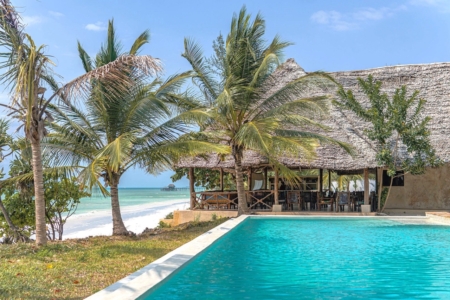
Paje is one of the most popular places to stay on Zanzibar’s southeast coast. The village is known for its wide white-sand... Read More
A Tanzania group joining safari is... Read More
Zanzibar is more than a beach... Read More
Paje is one of the most... Read More
Join The Discussion