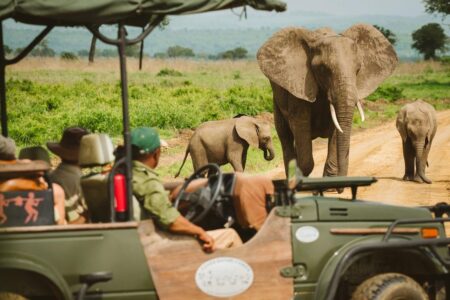
Imagine driving through Kenya’s Maasai Mara in a safari vehicle without the familiar sound of a diesel engine. Instead of listening to engine noise, you can hear birds calling from the riverbank, grass moving beneath an elephant’s feet and the sounds of the savannah around you.
This is the experience Emboo River is designed to offer. Located beside a forested bend of the Talek River inside Kenya’s Maasai Mara National Reserve, the luxury tented camp combines solar-powered operations with a fleet of electric safari vehicles.
What makes Emboo River particularly interesting is that solar energy is not limited to lighting the guest tents. The camp also uses its solar infrastructure to charge the batteries that power its electric safari vehicles. This connects the accommodation’s energy system directly to the game-drive experience.
For travellers looking for a luxury bush camp that combines wildlife viewing with practical sustainability measures, Emboo River offers a distinctive example of how a safari operation can work differently.
What makes Emboo River different from other Maasai Mara camps?
Many safari camps use solar panels to supply some of their electricity. Emboo River takes this further by combining solar-powered camp operations with an entirely electric safari vehicle fleet.
According to its current operator, Asilia Africa, the camp operates electric Land Rovers and Land Cruisers powered by its solar array. The property also incorporates farm-to-fork dining and water-management measures into its sustainability approach.
This matters because a safari camp’s environmental footprint extends beyond the accommodation itself. Vehicles consume energy during daily game drives, kitchens require fuel, and water must be managed responsibly in a sensitive natural environment.
Emboo River’s approach addresses several of these operational needs together rather than treating sustainability as an isolated feature.
The camp is also a member of the Certified B Corporation community, with a company profile documenting its certification since June 2023. This is a separate form of business certification and should not be confused with a guarantee that every aspect of a stay has zero environmental impact.
How do solar-powered electric safari vehicles work?
Solar-powered safari vehicles are electric vehicles whose batteries are charged using electricity generated by solar panels. They do not need sunlight to fall directly on the vehicle while it is driving.
At Emboo River, the solar installation supplies electricity for the camp and charges the batteries used by its electric safari fleet. The stored electricity allows the vehicles to operate during game drives, including when the sun is no longer shining.
This arrangement is particularly relevant in a remote safari destination, where conventional electricity infrastructure may be limited and diesel generators can otherwise provide backup power.
Solar generation, battery storage and vehicle charging must be managed together. The camp needs enough stored energy to meet its operating requirements, including guest accommodation, kitchen activities and scheduled game drives.
Emboo River’s system demonstrates how a safari business can integrate renewable electricity into both its hospitality facilities and its transport operations.
What is the advantage of an electric safari vehicle during a game drive?
Less engine noise around wildlife
One of the most noticeable differences is the reduction in engine noise during driving. An electric vehicle does not produce the same combustion-engine sound as a conventional diesel safari vehicle.
This can make the experience feel more connected to the surrounding environment. Guests may find it easier to hear birds, insects and other natural sounds while travelling through the reserve.
It is important, however, not to assume that animals will always ignore an electric vehicle. Wildlife responds to movement, distance, human behaviour and other factors, not simply engine noise.
No tailpipe exhaust during the drive
An electric safari vehicle does not emit exhaust gases through a tailpipe while operating. When its electricity comes from solar power, it can also reduce the operational emissions associated with burning diesel to power the vehicle.
The complete environmental impact depends on factors such as vehicle manufacture, battery production, maintenance and the equipment used to generate and store electricity. Nevertheless, using solar electricity instead of diesel for routine vehicle operation offers a clear potential advantage.
A different way to experience the Mara
The Maasai Mara is known for its lions, elephants, leopards, cheetahs, buffaloes and large seasonal movements of wildebeest and zebras.
An electric vehicle does not guarantee better sightings, but quieter driving can change how guests experience the landscape. The opportunity to listen to natural sounds without a continuously running combustion engine can be an important part of a wildlife trip.
The quality of the guide, the location of animals and the conditions during the drive remain central to the experience.
Where is Emboo River located?
Emboo River sits beside a forested bend of the Talek River in the Maasai Mara National Reserve in southwestern Kenya.
Its riverine setting provides a contrast to the reserve’s open grasslands. The surrounding habitat supports wildlife that moves through the broader Mara ecosystem, and the property is positioned for game drives into the reserve.
The Talek River is also part of the wider landscape associated with the Great Migration. During the migration season, wildebeest and zebras move through the Mara ecosystem, although their movements and the timing of river crossings vary from year to year.
Travellers should not assume that a migration crossing will take place near the camp during their stay. Wildlife movement depends on rainfall, grazing conditions and the decisions of the herds themselves.
For visitors arriving by air, the camp’s published information identifies Ol Kiombo as the closest airstrip. Transfer arrangements and journey times should be confirmed when booking.
What is the accommodation like at Emboo River?
The electric safari vehicles are only one part of the experience. Emboo River is a luxury tented camp designed for travellers who want to stay close to the natural environment without giving up comfort.
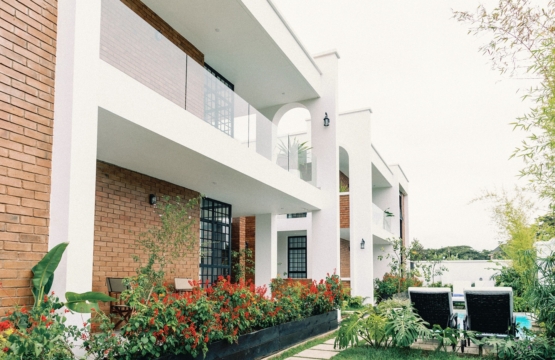
Its River Suites are set among the trees overlooking the river. The accommodation combines contemporary interiors with private spaces that allow guests to enjoy the surrounding landscape between game drives.
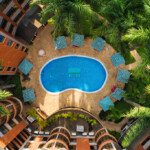
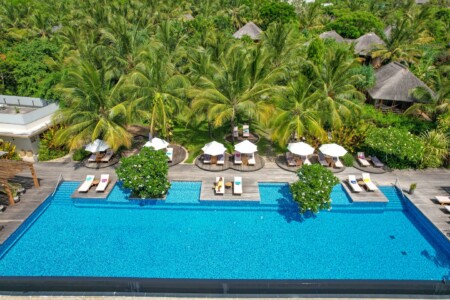
The camp’s facilities include a swimming pool and communal spaces for relaxing and dining. Guests can also arrange meals in different settings, subject to the camp’s current offerings.
Rather than presenting sustainability as an alternative to comfort, Emboo River combines renewable energy with the features expected of an upscale safari stay.
Travellers should confirm the latest room configuration, facilities, inclusions and availability directly with the operator before making a booking.
What other sustainability measures does Emboo River use?
The camp’s approach extends beyond its electric vehicle fleet.
Solar-powered camp operations
Solar energy supplies the camp’s electricity, including the power used to charge the electric safari vehicles. Battery storage helps make electricity available when solar generation is not occurring.
Food production and biogas
Emboo has promoted a farm-to-fork approach that includes produce from its hydroponic gardens. Its sustainability system has also included biogas production from organic kitchen waste, providing an alternative energy source for cooking.
These measures can help connect food production, waste management and energy use within the same operation.
Water treatment and reuse
The camp has described using natural treatment systems and filtration to manage wastewater. Responsible water treatment is especially important in a wildlife destination where rivers and surrounding habitats support a range of species.
Travellers interested in the details should ask the property about its current treatment system, water-reuse arrangements and how its environmental performance is monitored.
Taken together, these practices make Emboo River an interesting case study in integrated safari sustainability. Their effectiveness should be assessed through the actual systems in operation and the results the camp can document, rather than through marketing language alone.
Is Emboo River a good choice for a luxury safari?
Emboo River may be particularly appealing to travellers who want a luxury safari with a strong focus on renewable energy and quieter game drives.
It is worth considering for couples, wildlife photographers, environmentally conscious travellers and visitors who are interested in how tourism businesses can reduce their dependence on fossil fuels.
It may also appeal to guests who want to explore the Maasai Mara while learning more about sustainable hospitality.
However, the camp is not automatically the best option for every traveller. Budget, travel dates, preferred accommodation style, transfer costs and the wildlife areas a guest wants to explore should all influence the decision.
Anyone comparing properties should also look at the guiding arrangements, the number of game drives included, meal and drink policies, park fees and the overall itinerary.
When is the best time to visit Emboo River?
The Maasai Mara supports resident wildlife throughout the year, so a safari does not have to coincide with the Great Migration to be rewarding.
The migration usually brings large numbers of wildebeest and zebras into the Mara ecosystem around the middle of the year, with river crossings possible during the season. Exact timing varies, and no accommodation provider can guarantee a crossing on a particular date.
For travellers prioritising the migration, it is sensible to discuss seasonal wildlife movements and game-drive plans with the camp before booking.
Visitors travelling at other times of year can still encounter resident predators, elephants, giraffes, buffaloes and numerous bird species. Their experience will depend on the guide, local conditions and the time spent exploring the reserve.
How much does a stay at Emboo River cost?
The cost of staying at Emboo River depends on travel dates, accommodation arrangements, occupancy and the package booked. Rates may also vary with seasonal demand, particularly during popular wildlife-viewing periods.
Rather than relying on an old published rate, request a current quotation directly from the operator. Ask whether the price includes accommodation, meals, drinks, game drives, transfers and applicable park fees.
If you are comparing Emboo River with another luxury camp, compare the full cost of the trip rather than the nightly accommodation rate alone. A property that includes more services in its package may offer a different overall value from one with additional charges.
Is Emboo River really a 100% solar-powered safari camp?
Emboo River and its current operator describe the camp as solar-powered and its safari fleet as fully electric, with vehicles charged from the camp’s solar installation.
The phrase “100% solar-powered” should be understood in the context of the camp’s stated energy system, rather than as a claim that every material, supply or activity involved in a guest’s stay has no environmental footprint.
Electric vehicles still require batteries, accommodation requires construction materials, and food and other supplies must reach the property. These activities can have environmental impacts beyond the camp’s direct energy use.
The most useful distinction is that Emboo River has integrated solar electricity and electric vehicles into its operating model, rather than simply offering a few solar-powered lights alongside conventional diesel game drives.
For travellers who want to assess its performance in greater detail, the best questions concern current energy generation, battery storage, backup arrangements, vehicle charging and independently documented environmental outcomes.
Final verdict: Is Emboo River worth considering?
Emboo River stands out in the Maasai Mara because it brings together luxury tented accommodation, solar-powered operations and an electric safari vehicle fleet in one property.
Its position beside the Talek River provides access to the wider Mara wildlife ecosystem, while its quieter game-drive approach offers a different experience from conventional diesel-powered safari transport.
For travellers who want a luxury wildlife trip that also demonstrates practical sustainability measures, it is a property worth researching.
The key reason to consider Emboo River is not simply that it uses solar power. It is the way the camp connects renewable electricity to everyday operations, including the vehicles used to explore the reserve.
Before booking, verify the current package, accommodation details and seasonal arrangements with the operator.
Official property information: Emboo Camp at Asilia Africa
Independent business certification: Emboo River on B Lab’s Certified B Corporation directory

 by

Join The Discussion